Some of the articles published in this dossier analyze The Back of the Turtle by Thomas King. Please read the introduction below for full context regarding the study of King's works.

“The Future of Threat is Forever”: A Brief Introduction
By Prof. Matthew Cormier
Departement of English Studies, Université de Moncton
As French philosopher and theorist Jacques Derrida famously said, because of the prophetic and veiled nature of the Book of Revelation, we can think of “the apocalypse as sending of the apocalypse, the apocalypse that sends itself” (155); in other words, “there is the apocalypse without the apocalypse” (167). Indeed, humanity’s fascination with eschatology has ensured the pervasion of apocalyptic mentalities in our cultures, societies, and, of course, artistic productions. Religious studies scholar Tina Pippin has argued that this tendency is due to the cyclical nature of the apocalypse, since “every apocalypse is a sequel” (1)—the end of a world but not of the world—while theorist Brian Massumi has pointed out the affective power of the futurity of threat in guiding our anticipatory behaviours and constructs because “the future of threat is forever” (53). Yet the apocalypse is also a space of great potential, one which marks the transition between an old world and a new one, and it is precisely in this liminal ambiguity where writers and literary criticism can do much generative work.
The texts comprising this special issue of Discours/e were produced in the context of a Winter 2026 comparative literature course at the Université de Moncton titled “Apocalypse and Intersectionality in Contemporary Literatures in Canada.” The course aimed to engage apocalyptic themes, figures, and structures in its reading of intersectional literature in twenty-first-century Canada, questioning how they function in the current moment to expose and interrogate capitalism, colonialism, racism, the Anthropocene, and other prevalent systemic crises. Among others, the syllabus featured women, Black, Indigenous, queer, trans, and Chinese-Canadian authors, in addition to a number of critical and theoretical texts in the field, which allowed for an intersectional lens through which to study apocalyptic narratives and discourses across a variety of literatures published in Canada.
Important to note is the inclusion on the course syllabus—and consequently in a few of the critical texts to follow—of Thomas King’s novel, The Back of the Turtle. For the unaware, King, who claims he believed for the majority of his 82-year-old life that he was of Cherokee descent (King; Sinclair), learned from the Tribal Alliance Against Frauds, who investigated the matter, that he, in fact, had no Indigenous ancestry; he subsequently announced this finding publicly before withdrawing his forthcoming book (Drudi). As a professor, I faced two options upon learning of this development in November 2025: take the text off the syllabus altogether, which I still had time to do before the next term, or keep it on and use the opportunity to, hopefully, engage in challenging, but meaningful conversations with my students, some of them Indigenous themselves. I chose the latter.
In the classroom, we discussed at length the nuanced stakes of this development: how harmful it could be to Indigenous peoples, the questions that literary scholars would face in light of this information, especially regarding the institutions—including ours—which enable such a case to go undetected for so long, problems of ethics in separating the art from the artist and if doing so is ever truly possible, and what responsible approaches to King and his works might look like going forward. I do not think any of this tragedy should be celebrated nor accepted, and I know that accountability and reckoning are necessary in our institutions. My hope is that we can still engage King’s work in its proper, complicated, and at times painful context to continue to make meaningful humanist headway in a time fraught with crises, as the authors in this special issue have attempted to do.
The first text of this special issue, Nadyne Kuhn’s “Superstitions and Rituals in Thomas King’s The Back of the Turtle and Nicolas Dickner’s Apocalypse for Beginners,” compares the ways in which superstitions and rituals work to give meaning and order to chaos in two apocalyptic novels, an environmentally conscious work by the recently maligned Thomas King as well as a light-hearted take on fate, chance, and the end of the world by Québécois writer Nicolas Dickner. Staying on the topic of ritual, the following text, Mari-Alex Rioux’s “Scrap Economics in The Tiger Flu and The Back of the Turtle,” also discusses King’s novel in contrast to Larissa Lai’s speculative novel The Tiger Flu. Rioux examines the scavenger figures in these apocalyptic novels from a socio-ecological perspective, arguing that both human and non-human play a crucial role in our society-as-ecosystem.
Next, the issue moves towards themes of family and community with texts by Laura Delaney and Idealy Tiffany Rafidinarivo. In her piece, “Patchwork Family Roles and Tropes in Canadian Apocalypse Literature,” Delaney brings into conversation King’s The Back of the Turtle, Cherie Dimaline’s The Marrow Thieves, and Catherine Leroux’s The Future to emphasize the importance of supportive communities in times of crisis. Meanwhile, Rafidinarivo, in “Temporality and the Uneven Experience of Apocalypse in The Marrow Thieves and The Outer Harbour,” compares Dimaline’s novel to The Outer Harbour, a collection of short stories by Wayde Compton, in an attempt to frame how people move—individually and communally—through temporalities in which future and past often collapse.
Finally, the two texts that conclude this issue—and as Rafidinarivo’s work on temporality anticipates—are preoccupied with metaphor and conception within apocalyptic experiences. Kuhn’s second text in this volume, “To Be a Starfish: Identity and Community in Larissa Lai’s The Tiger Flu and Vivek Shraya’s I’m Afraid of Men,” also takes up Lai’s novel, in this instance in conjunction with Vivek Shraya’s poetic memoir to discuss how both works use the starfish as a metaphor to represent injury as well as a means of healing, which can translate to a new future for Canadian Literature, an institution much criticized as of late for its exclusionary principles and practitioners. In a similar vein, Geneviève Flanagan’s “Posthuman Performativity: Apocalyptic Disidentification in ‘Rachel’ by Larissa Lai and ‘How Do We Get Out of Here?’ by Lorraine York,” which closes out this special issue, engages both a futuristic poem by Larissa Lai as well as critical article by CanLit scholar Lorraine York to criticize and reframe historical feminist discourse in the field and to explore apocalyptic feminist reconstructive memory.
While these critical works do not pretend to represent the entirety of the exhaustive work being done in the literatures of Canada with respect to various apocalypses, they do engage the crises faced by, as well as the stakes therein, of diverse perspectives. They also stand as examples of the necessary and ongoing work of emerging scholars in literary studies in Canada through these cyclical apocalyptic times.
Works Cited
- Derrida, Jacques. “On a Newly Arisen Apocalyptic Tone in Philosophy.” Translated by John Leavey, Jr. Raising the Tone in Philosophy: Late Essays by Immanuel Kant, Transformative Critique by Jacques Derrida, edited by Peter Fenves, Johns Hopkins UP, 1993, pp. 117–71.
- Drudi, Cassandra. “Thomas King reveals he has no Indigenous ancestry, withdraws forthcoming book from publication.” Quill & Quire. Quill & Quire. 26 November 2025. Thomas King reveals he has no Indigenous ancestry, withdraws forthcoming book from publication – Quill and Quire. https://quillandquire.com/omni/thomas-king-reveals-he-has-no-indigenous-ancestry/. Accessed 3 September 2026.
- King, Thomas. “A most inconvenient Indian.” The Globe and Mail. The Globe and Mail. 24 November 2025. https://www.theglobeandmail.com/opinion/article-a-most-inconvenient-indian/. Accessed 28 October 2026.
- Massumi, Brian. “The Future Birth of the Affective Fact: The Political Ontology of Threat.” The Affect Theory Reader, edited by Melissa Gregg and Gregory J. Seigworth, Duke up, 2010, pp. 52–70.
- Pippin, Tina. Apocalyptic Bodies: The Biblical End of the World in Text and Image. Routledge, 1999.
- Sinclair, Niigaan. “The inconvenient truth: Thomas King’s admission he isn’t Cherokee hits hard.” The Winnipeg Free Press. The Winnipeg Free Press. 24 November 2025. https://www.winnipegfreepress.com/opinion/columnists/2025/11/24/the-inconvenient-truth-thomas-kings-admission-he-isnt-cherokee-hits-hard. Accessed 25 October 2026.
Articles in this issue (5)

Nadyne Kuhn
Superstitions and Rituals in Thomas King’s “The Back of the Turtle” and Nicolas Dickner’s “Apocalypse for Beginners”

Mari-Alex Rioux
Scrap Economics in “The Tiger Flu” and “The Back of the Turtle”

Laura Delaney
Patchwork Family Roles and Tropes in Canadian Apocalypse Literature

Idealy Tiffany Rafidinarivo
Temporality and the Uneven Experience of Apocalypse in “The Marrow Thieves” and “The Outer Harbour”

Nadyne Kuhn
To Be a Starfish: Identity and Community in Larissa Lai’s “The Tiger Flu” and Vivek Shraya’s “I’m Afraid of Men”
Dossier Editor

Matthew Cormier
Matthew Cormier (he/him) is Associate Professor and Chair of the Department of English Studies at the Université de Moncton, where he teaches English and Comparative Literature. Alongside Amanda Spallacci, he is the co-editor of Digital Memory Agents in Canada: Performance, Representation, and Culture (U of A Press, 2024). His work has appeared...
Matthew Cormier (he/him) is Associate Professor and Chair of the Department of English Studies at the Université de Moncton, where he teaches English and Comparative Literature. Alongside Amanda Spallacci, he is the co-editor of Digital Memory Agents in Canada: Performance, Representation, and Culture (U of A Press, 2024). His work has appeared in academic journals and books across Canada, the United States, and Europe.
Contributions to this dossier
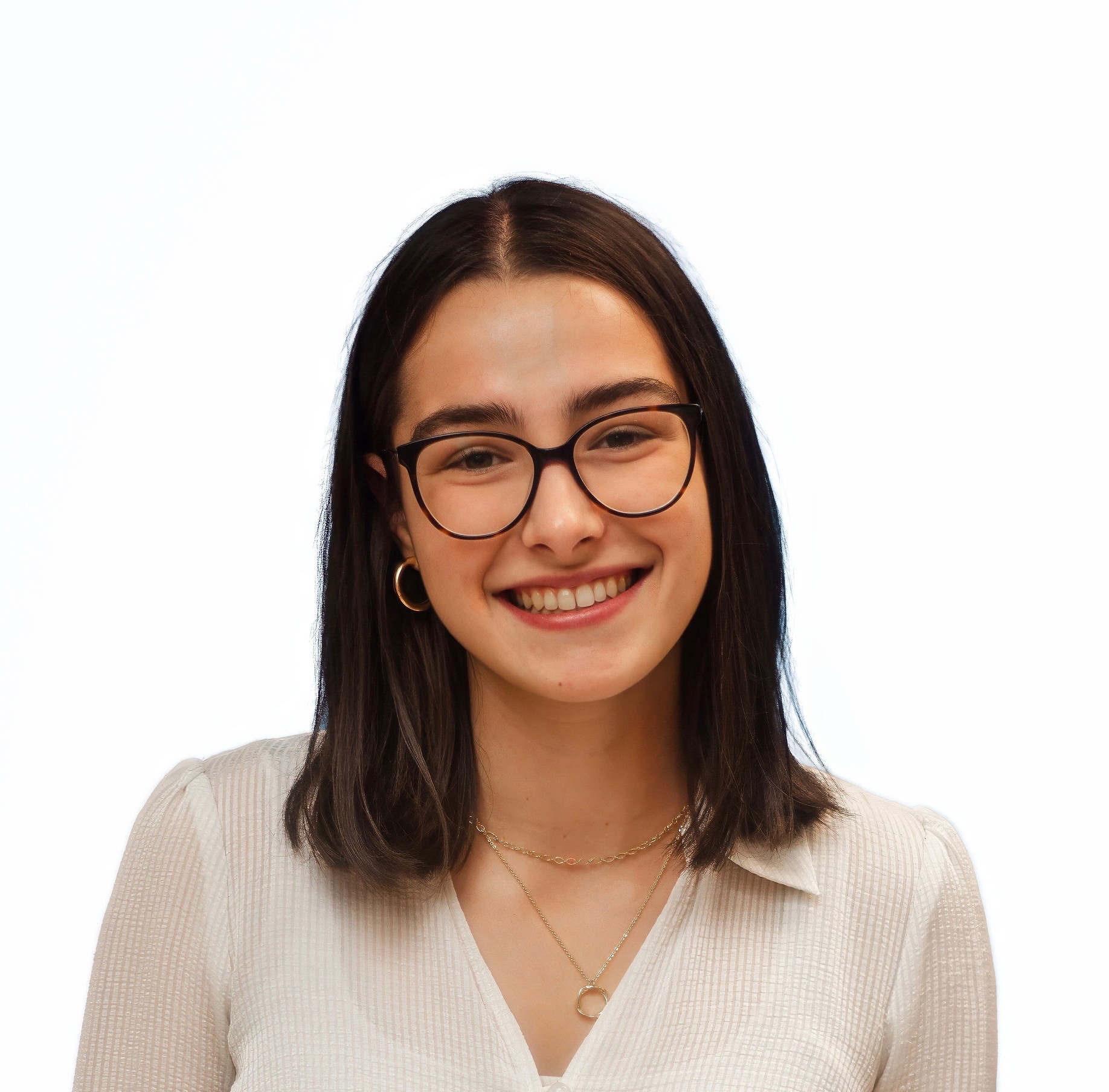
Geneviève Flanagan
Geneviève Flanagan (she/her) is a master’s student in English literature at the University of Toronto. She recently completed a bachelor’s degree in English studies at the University of Moncton, where her interest in intersectionality in feminist texts from Canadian literatures first emerged.
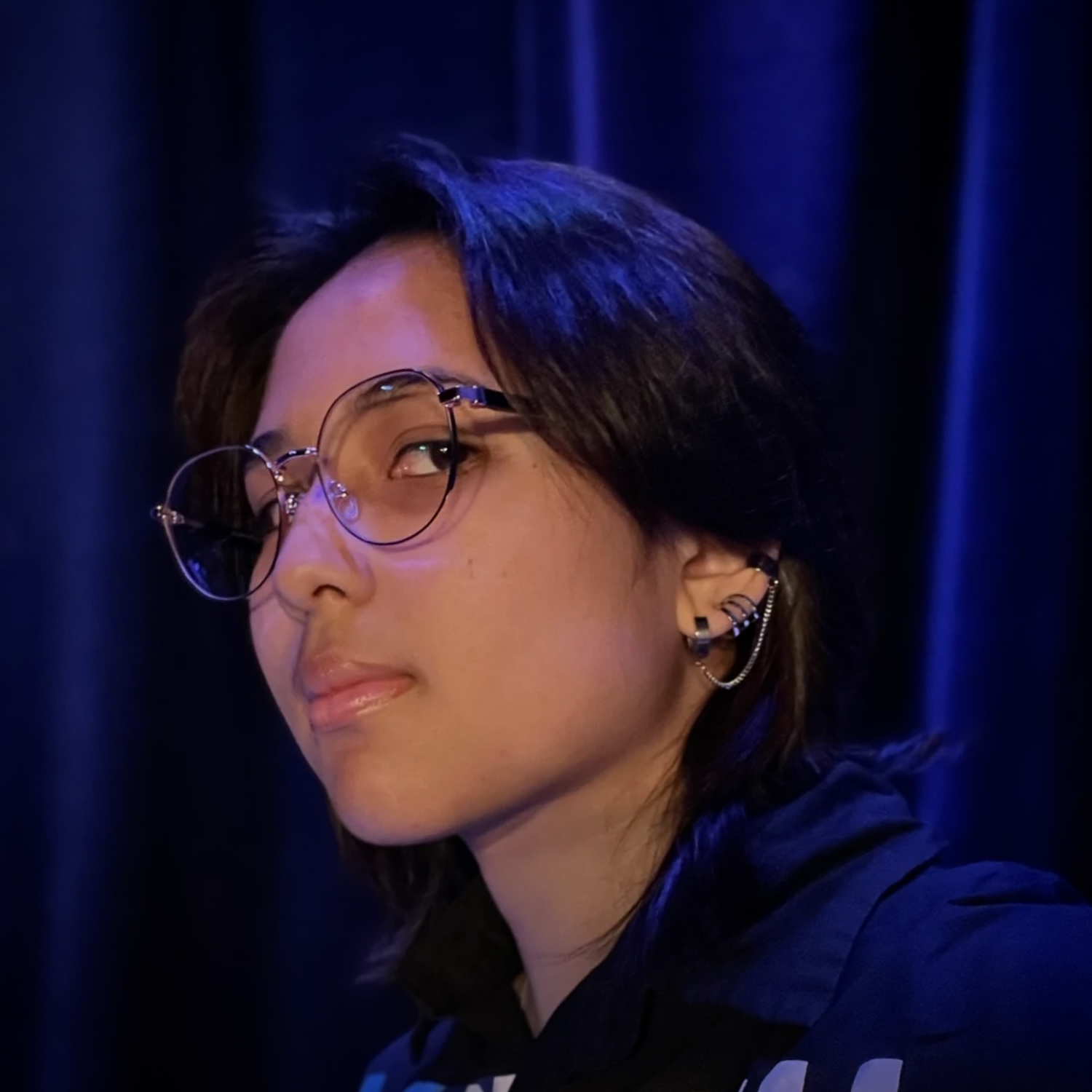
Idealy Tiffany Rafidinarivo
Idealy Tiffany Rafidinarivo (she/her) is a versatile artist from Antananarivo, Madagascar. Her practice blends writing, music, and audiovisual media that showcase her passion for duality. Based in Canada since 2023, she is currently pursuing a Multidisciplinary Bachelor degree at the University of Moncton.

Laura Delaney
Laura Delaney (she/her) is a student currently pursuing a Bachelor of Education degree at Université de Moncton. Majoring in English, she hopes to teach English as a second language to Francophone students by promoting the development of critical thinking skills and encouraging authentic literary creativity. Patchwork Family Roles and Tropes…
Laura Delaney (she/her) is a student currently pursuing a Bachelor of Education degree at Université de Moncton. Majoring in English, she hopes to teach English as a second language to Francophone students by promoting the development of critical thinking skills and encouraging authentic literary creativity.
Patchwork Family Roles and Tropes in Canadian Apocalypse Literature is her first published work.

Mari-Alex Rioux
Mari-Alex Rioux is a multidisciplinary artist from Cocagne, NB. It describes themselves as a musical archeologist, a wannabe luddite with a passion for technology, or as a bookworm, "but in a very literal sense, like an an actual worm". Its musical explorations are shared on their radio show Le...
Mari-Alex Rioux is a multidisciplinary artist from Cocagne, NB.
It describes themselves as a musical archeologist, a wannabe luddite with a passion for technology, or as a bookworm, "but in a very literal sense, like an an actual worm".
Its musical explorations are shared on their radio show Le Concept, which airs on CKUM's (Codiac FM) airwaves.

Nadyne Kuhn
Nadyne Kuhn (she/her/elle/la) is a writer and actress who has appeared in many Hubcity Theatre productions, most recently as Adriana in Shakespeare in the Park’s The Comedy of Errors. She has now decided to change career paths and will begin a master’s degree in...
Nadyne Kuhn (she/her/elle/la) is a writer and actress who has appeared in many Hubcity Theatre productions, most recently as Adriana in Shakespeare in the Park’s The Comedy of Errors. She has now decided to change career paths and will begin a master’s degree in comparative Canadian literature at the Université de Moncton in the fall of 2026.
To Cite This Dossier: